TMJ ट्रीटमेंट — जबड़े के दर्द और जकड़न का समाधान
TMJ ट्रीटमेंट — जबड़े के दर्द और जकड़न का समाधान
डॉ. नितिन शर्मा, बीडीएस (मणिपाल विश्वविद्यालय) • 10-12 मिनट
एक भारतीय महिला हल्के दर्द से अपने जबड़े को छू रही हैं, healthcare lifestyle photography
प्रस्तावना
शीला जी सुबह उठती हैं तो जबड़ा जकड़ा हुआ होता है। मुँह खोलने में “क्लिक” की आवाज़ आती है। खाना चबाते समय जबड़े में दर्द होता है। कभी-कभी सिरदर्द इतना तेज़ होता है कि वे समझती हैं migraine है। कान के पास एक अजीब दर्द और pressure feel होती है।
उन्होंने ENT doctor को दिखाया — ears ठीक थे। Neurologist के पास गईं — कुछ नहीं मिला। General physician ने कहा — stress है, relaxation करो।
3 साल बाद जब dentist के पास गईं तो पता चला — TMJ Disorder था।
यह कहानी बहुत common है। TMJ (Temporomandibular Joint) disorders — जबड़े के joint की बीमारियाँ — अक्सर misdiagnosed होती हैं या “stress” में dismiss हो जाती हैं। लेकिन यह real, treatable condition है।
TMJ Treatment क्या है?
TMJ (Temporomandibular Joint) वह joint है जो आपके जबड़े (mandible) को खोपड़ी (skull) से जोड़ता है। यह कान के ठीक आगे, दोनों तरफ होता है। यह एक बहुत complex joint है जो खाने, बोलने, हंसने, और यहाँ तक कि सोने में भी काम करती है।
TMJ Disorder (जिसे TMD या TMJD भी कहते हैं) में इस joint में और इसके आसपास की muscles में pain, dysfunction, और abnormal movement होती है।
इसे एक analogy से समझें: यह joint एक door hinge की तरह है। अगर hinge में rust लग जाए, screw loose हो, या position गलत हो जाए — तो दरवाज़ा ठीक से न खुलेगा, आवाज़ करेगा, और धीरे-धीरे खराब होता जाएगा। TMJ disorder में भी यही होता है।
TMJ Disorders के कारण:
- Bruxism (रात को दांत पीसना / teeth grinding)
- Stress-induced jaw (जबड़ा) clenching
- Arthritis (jaw joint में)
- Jaw injury / trauma
- Malocclusion (गलत bite)
- Disk displacement (articular disk अपनी जगह से खिसकना)
- Hypermobility (joint बहुत अधिक movement)
TMJ Treatment क्या होता है:
Conservative (non-surgical) से surgical तक — symptoms और cause के अनुसार।
- Splint therapy (occlusal splint / night guard)
- Physical therapy और jaw exercises
- Medications
- Botox injections
- Arthrocentesis (joint washing)
- Surgery (rare, severe cases)
मरीज़ इस इलाज से क्यों डरते हैं?
1. “कोई diagnosis ही नहीं मिली — सच में TMJ है?”
TMJ diagnosis clinical है और specialized imaging (MRI of joint) से confirm होती है। Experienced dentist or oral medicine specialist accurately diagnose कर सकते हैं।
2. “Surgery (ऑपरेशन) होगी?”
90%+ TMJ cases बिना surgery के ठीक होती हैं। Conservative management — splint, exercises, medications — आमतौर पर sufficient होती है।
3. “Splint पहनना कितना uncomfortable होगा?”
शुरुआत में 1-2 हफ्ते adjustment लगती है। उसके बाद अधिकांश लोग splint पहनकर comfortably सोते हैं।
4. “यह ठीक नहीं होगा — chronic problem रहेगी”
Acute TMJ disorders में 70-80% मरीज़ conservative treatment से significant improvement महसूस करते हैं। Chronic cases में लंबा management ज़रूरी हो सकता है लेकिन quality of life बहुत improve होती है।
5. “Jaw exercise से और नुकसान होगा”
Prescribed jaw exercises carefully designed होती हैं — physical therapist या dentist द्वारा। Aggressive movement नहीं करना है। Gentle, specific exercises healing (भरना/ठीक होना) accelerate करती हैं।
6. “Botox injection (सुई/टीका) कैसे help करेगा?”
Botox jaw muscles (masseter) में inject करने से overactive muscles relax होती हैं — bruxism और clenching-related TMJ में यह very effective है।
7. “क्या सभी problems ठीक होंगी?”
सभी symptoms — pain, clicking, limited opening, headaches — कितने ठीक होंगे यह severity पर depend करता है। Most patients को significant relief मिलती है।
8. “Splint बनवाना ज़रूरी है या chemist से ले लें?”
Custom-made splints (dentist-made) और store-bought differ significantly करते हैं। Custom splints आपके bite के अनुसार बनते हैं — store-bought “one size fits all” से TMJ worsen हो सकती है।
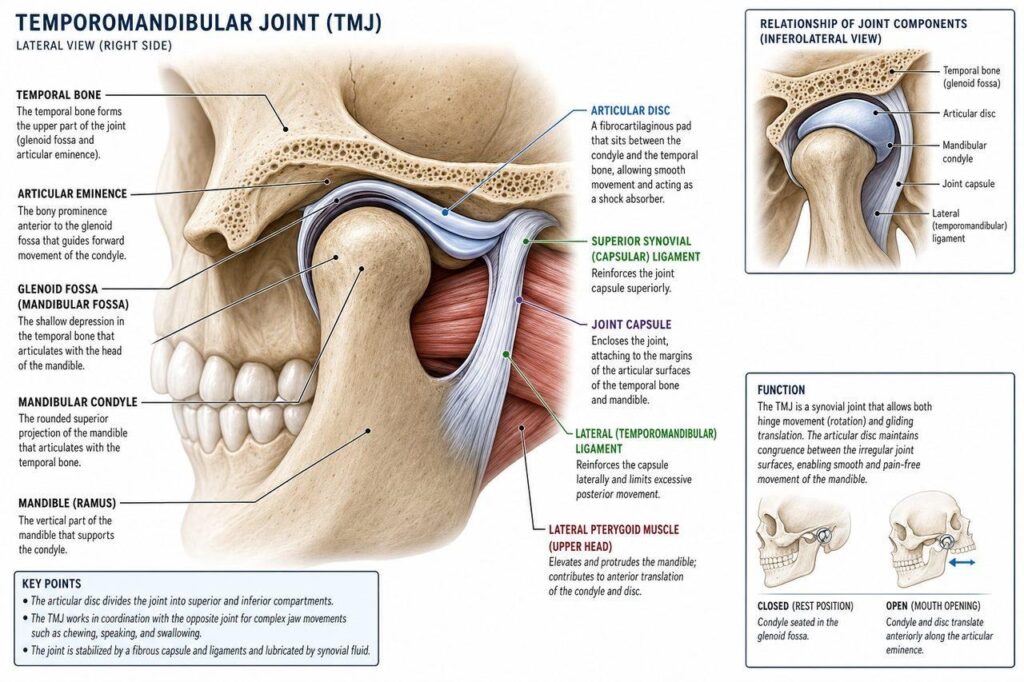
TMJ joint की anatomical संरचना
यह इलाज कब करवाना चाहिए?
निम्नलिखित में से कोई भी लक्षण हो तो dentist से मिलें:
1. जबड़े में दर्द — jaw, temple, ear के आसपास — especially सुबह या खाने के बाद।
2. मुँह खोलने-बंद करने पर “Click” या “Pop” की आवाज़ (painful हो या न हो)।
3. Jaw lock होना — मुँह पूरा न खुले (< 35mm) या जकड़ा हुआ feel हो।
4. Chronic headache — खासकर temples, forehead, या back of head में — जिसका कारण clear न हो।
5. Ear में दर्द या pressure जब ear ठीक हो।
6. Teeth grinding या jaw clenching — खासकर रात को (partner ने कहा हो)।
7. Neck और shoulder pain — chronic jaw tension से related।
8. Chewing में दर्द या fatigue।
9. Facial asymmetry — jaw एक side shift होना।
10. Bruxism के कारण दांतों का घिसाव — dentist ने observe किया हो।
इस इलाज के क्या-क्या फायदे हैं?
- Pain relief: Jaw, temple, ear pain — conservative treatment से 70-80% cases में significant relief।
- Headache reduction: Tension-type headaches और migraine-like pain में dramatic improvement।
- Improved jaw function: खाना ठीक से चबाना, मुँह पूरा खोलना।
- Sleep quality: Bruxism कम होने से रात की नींद बेहतर — partner को भी (grinding की आवाज़ बंद)।
- Teeth protection: Splint therapy से दांतों का घिसाव रुकता है — expensive dental work protect होता है।
- Neck और shoulder relief: Jaw tension का chain effect neck muscles पर होता है — TMJ treatment से यह भी improve।
- Quality of life: Chronic pain से मुक्ति से daily activities, concentration, और mood सब बेहतर।
- Non-invasive options: Surgery के बिना, medications पर long-term dependency के बिना relief possible।
- Preventive: Early treatment से articular disk damage और joint degeneration prevent होती है।
- Systemic benefits: Chronic pain का stress response, immunity, और cardiovascular system पर negative effect होता है — treatment से indirectly सब improve।
अगर यह इलाज नहीं कराया तो क्या नुकसान हो सकते हैं?
- Progressive Joint Damage: Untreated TMJ disorder में articular disk (cartilage) damage होती है — यह reversible नहीं।
- Chronic Pain: Acute TMJ जो treat नहीं हुई — chronic pain syndrome में convert हो सकती है जो treat करना और कठिन होता है।
- Jaw Lock (Open or Closed): Disk displacement बढ़ने से jaw lock हो सकती है — emergency।
- Dental Destruction: Untreated bruxism से दांत इतने घिस जाते हैं कि root canal (जड़ की नस का इलाज), crowns, या veneers (दांत के आगे पतली परत) की ज़रूरत पड़ती है।
- Bite Collapse: Severe teeth grinding से vertical dimension (जबड़े की ऊँचाई) घट जाती है।
- Chronic Headaches: Untreated TMJ से persistent tension headaches और migraines।
- Hearing Effects: Rare लेकिन severe cases में TMJ joint के आसपास structures on ear function affect हो सकती है।
- Psychological Impact: Chronic pain, sleep disruption, और functional limitations से anxiety और depression।
- Expensive Future Treatment: Mild early TMJ → splint + exercises। Advanced TMJ → Arthrocentesis/surgery → dental reconstruction। Prevention (रोकथाम) और early treatment बहुत cost-effective है।
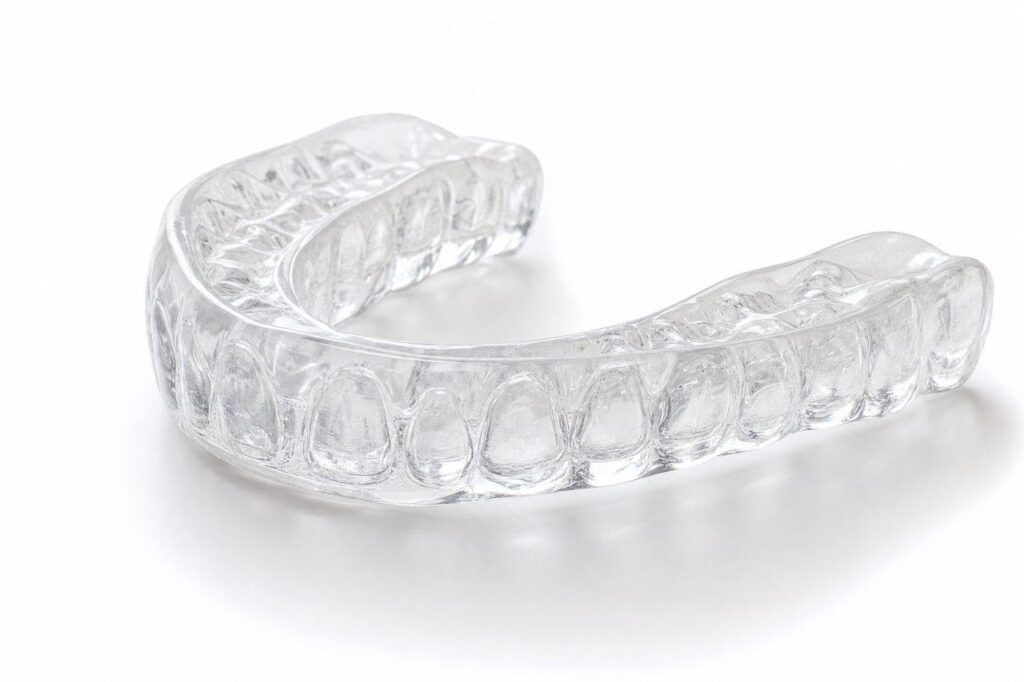
Custom TMJ night guard splint
इलाज की प्रक्रिया कैसे होती है?
TMJ Diagnosis और Treatment — Step by Step:
1. Comprehensive Evaluation (60-90 मिनट):
- Detailed history — pain location, triggers, duration, jaw sounds।
- Clinical examination — jaw opening range, joint sounds, muscle tenderness।
- Dental examination — tooth wear, bite analysis।
- Imaging: Panoramic X-ray, MRI of TMJ (gold standard)।
1. Conservative Treatment (Phase 1 — 4-8 सप्ताह):
- Occlusal Splint: Custom-made (upper या lower) — रात को पहनना। Muscles relax होती हैं और bruxism protect करता है।
- Medications: NSAIDs (ibuprofen), muscle relaxants, सोने में help के लिए।
- Jaw Exercises: Physical therapist द्वारा prescribed gentle stretching और strengthening।
- Hot/Cold Therapy: Warm compress muscles relax करता है, cold compress swelling (सूजन) में।
- Diet modification: Soft diet (खानपान) — tough, chewy foods avoid।
1. Advanced Conservative (Phase 2 — यदि Phase 1 insufficient हो):
- Botox Injections: Masseter और temporalis muscles में — clenching और bruxism dramatically कम।
- Trigger Point Injections।
- Low-level laser therapy।
1. Surgical Options (severe cases — < 10%):
- Arthrocentesis: Joint में needle से lavage (washing)।
- Arthroscopy: Minimal invasive joint surgery।
- Open Joint Surgery: Rare, severe cases।
Timeline: Mild cases — 4-8 हफ्तों में improvement। Moderate cases — 3-6 महीने management।
इलाज के बाद देखभाल (Post-treatment Care)
1. Splint wearing compliance: रात को consistently पहनें — शुरुआत में uncomfortable लगे पर छोड़ें नहीं।
2. Soft diet: Hard, chewy, large-bite foods avoid करें। छोटे टुकड़े करके खाएं।
3. Jaw exercises: Prescribed exercises रोज़ करें — 5-10 मिनट।
4. Stress management: TMJ का stress से deep connection है। Meditation, yoga, deep breathing।
5. Sleep hygiene: Side sleeping से TMJ strain बढ़ सकती है — back sleeping या supportive pillow।
6. Habits: Nail-biting, pen-chewing, excessive gum (मसूड़ा) chewing, और cheek-biting avoid।
7. Posture: Neck और shoulder posture improve करें — poor posture jaw tension बढ़ाती है।
8. Cold पर ध्यान: ठंडे/AC में jaw muscles extra tense होती हैं — warm compress help करता है।
9. Regular follow-up (दोबारा जाँच): Monthly पहले 3 महीने। Progress track होती है।
10. Botox: Effect 3-6 महीने रहता है — repeat injection ज़रूरी होती है।
मुख्य बातें
- TMJ disorder सिर्फ jaw pain नहीं — headache, ear pain, neck pain सब connected हो सकते हैं।
- 90%+ cases बिना surgery के conservative treatment से ठीक होती हैं।
- Custom occlusal splint TMJ treatment और teeth protection दोनों के लिए essential है।
- Bruxism और stress TMJ के सबसे common triggers हैं — stress management ज़रूरी।
- Botox jaw muscles में TMJ-related bruxism के लिए very effective है।
- Early treatment से joint damage और dental destruction दोनों prevent होती है।
- Misdiagnosis common है — यदि headache/ear pain का कारण न मिले तो dentist से TMJ evaluate करवाएं।
| 💡 ऑरली का सुझावऑरली में हम मानते हैं कि अनजाना, unexplained दर्द — जो कोई diagnose नहीं कर पाया — often TMJ से जुड़ा होता है। डॉ. नितिन एक thorough TMJ evaluation करते हैं — clinical exam, imaging, और bite analysis। यदि TMJ disorder है, तो एक personalized, step-by-step treatment plan बनाया जाएगा। अनावश्यक surgery नहीं — पहले conservative treatment। आपका दर्द real है, और इसका solution भी real है। |
अक्सर पूछे जाने वाले प्रश्न
प्रश्न: मेरे jaw में click की आवाज़ है पर दर्द नहीं — क्या treat करना ज़रूरी है?
उत्तर: Painless clicking (reciprocal clicking) बहुत common है और अकेले में ज़रूरी नहीं कि treatment हो। लेकिन dentist से evaluation कराएं — disk position assess होनी चाहिए। यदि clicking बढ़ रही है, catching या locking हो रही है, या मुँह पूरा नहीं खुल रहा तो treatment जल्दी शुरू करें। Preventive splint wear early degeneration रोक सकता है।
प्रश्न: Splint कितने समय पहनना होगा?
उत्तर: यह condition की severity पर depend करता है। Acute cases में 3-6 महीने। Chronic bruxism वाले लोग अक्सर long-term (indefinitely) rात को splint wear करते हैं क्योंकि यह teeth protection के लिए भी ज़रूरी है। जैसे glasses रोज़ पहनते हैं, वैसे ही splint routine हो जाती है।
प्रश्न: TMJ के लिए Botox — क्या यह safe है और काम करता है?
उत्तर: हाँ। Masseter muscles में Botox injection bruxism और clenching-related TMJ pain के लिए very effective है। Multiple clinical studies में 80%+ success rate documented है। Effect 3-6 महीने रहता है, फिर repeat। Side effects minimal हैं — temporary jaw weakness possible। यह long-term TMJ management का proven option है।
प्रश्न: क्या TMJ disorder से permanent jaw damage होता है?
उत्तर: Untreated progressive TMJ disorder में articular disk damage, bone remodeling, और osteoarthritis हो सकती है। लेकिन यह generally severe, long-standing cases में होता है। Early diagnosis और treatment से permanent damage की संभावना बहुत कम है। यही reason है जल्दी diagnose और treat करना important है।
प्रश्न: Physiotherapy TMJ में कैसे help करती है?
उत्तर: TMJ-specialized physical therapist jaw exercises, manual therapy, postural correction, और ultrasound/TENS therapy से help करते हैं। यह splint therapy का complement है। Jaw opening range, muscle tension, और pain — तीनों में measurable improvement होती है। Especially chronic TMJ में physiotherapy बहुत effective है।
प्रश्न: क्या TMJ disorder बच्चों में होता है?
उत्तर: हाँ, teenagers में TMJ symptoms relatively common हैं — especially जो stress में हों या bruxism हो। Symptoms adults जैसे ही हैं। बच्चों में conservative management (splint, exercises) सबसे appropriate है। Pediatric dentist या TMJ specialist से evaluation ज़रूरी है।
प्रश्न: TMJ pain और regular toothache में फर्क कैसे करें?
उत्तर: Toothache आमतौर पर एक specific दांत में localize होती है — hot, cold, या biting से trigger। TMJ pain diffuse होती है — joint, temple, ear, jaw muscles। Morning में worse (रात की grinding के कारण), chewing से बढ़ती है। Aspirin/ibuprofen toothache से बेहतर relief करते हैं TMJ से। लेकिन accurate diagnosis dentist से ही मिलेगी।
प्रश्न: क्या TMJ disorder का कोई permanent cure है?
उत्तर: यह condition के underlying cause पर depend करता है। Acute trauma से TMJ — generally fully resolve। Stress/bruxism-related — manageable with ongoing care लेकिन “cure” नहीं। Degenerative/arthritic — long-term management। Goal complete cure से ज़्यादा “functional and pain-free life” है — जो अधिकांश patients achieve करते हैं।